
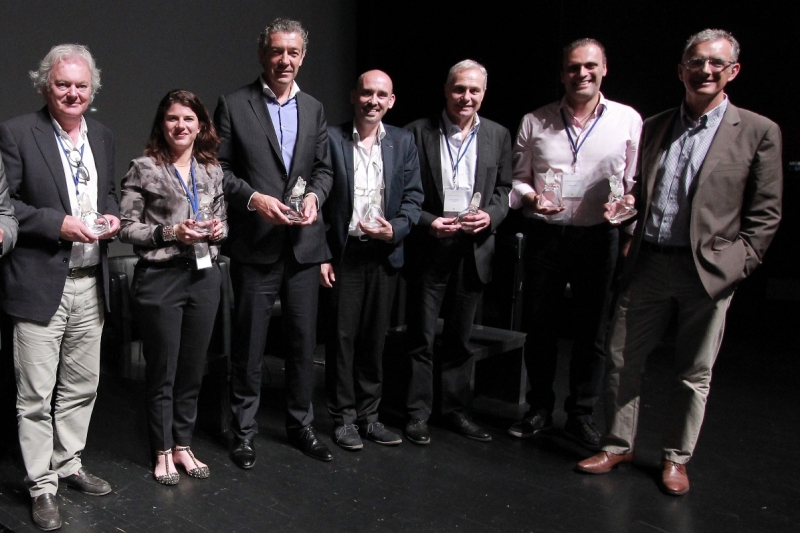
Several major contributors enabled to explore different approaches to this topic. Christophe Riou, Scientific and Development Director of the French Vine and Wine Institute showed what oenologists had done for innovation; Bernard Praz, Director responsible for wine buying at the Grand Chais de France Group, presented their contribution to the development of marques; Hubert de Boüard, co-proprietor of Château Angelus and consultant oenologist, dealt with the enhancement of terroirs and vine varieties which oenologists have done so much to bring about; while Gérard Bertrand, proprietor of the wines that go by that name, spoke of the serenity that comes of the skills, values and the art of living defended by oenologists.
Closing the morning’s proceedings, Yann Juban, Assistant to the Director General of the OIV, traced the evolution of the international definition of the oenologist between 1976 and the definition adopted by the OIV in 2013, from a collaborator ensuring respect for fair practice to an expert able to carry out duties in all fields.
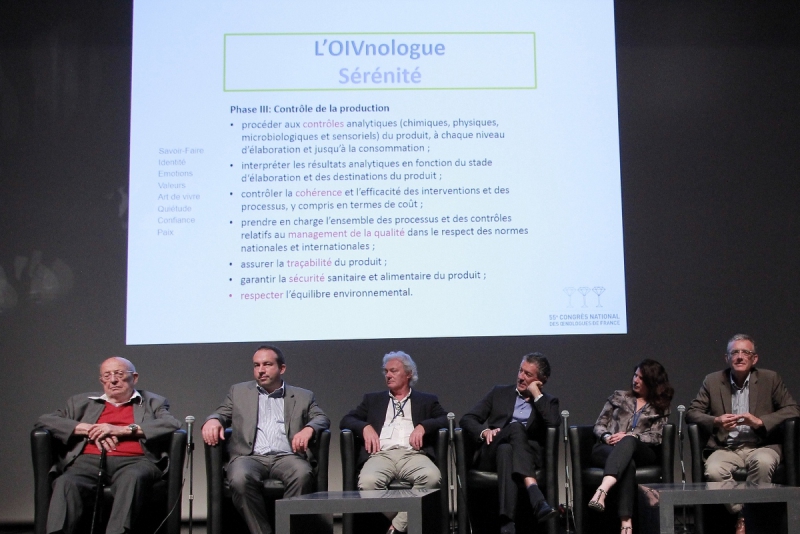
Referring to the different phases of the oenologist’s profession, as defined by the OIV, he listed all the different aspects of the work, showing how they correspond to the international view of the oenologist. Innovation, especially in regard to vineyards, “with the aim of adapting the raw material to the demands of […] production and consumer requirements” (phase I of the profession); the marque, formulating “recommendations in the field of marketing on the designation and presentation of the product […] in order to improve the response to the consumer preferences identified” (phase IV); enhancement, “consider the ethical, including potential effects on consumer health, economic, social, environmental and technical aspects and develop proposals for measures in order to adapt production to needs and demands”(phase V) and last but not least, serenity, ensured by means of controls, traceability, quality management, food safety and respect for the environmental balance (phase III).

“Wine is also a major sales item and it matters that people should know what it is, and what it is not – thus so much hangs on its correct definition,” said the French President, adding that “this is not only the responsibility of producers; consumers too need to be part of the process, and that is why an intergovernmental organisation was set up in 1924, the Organisation of Vine and Wine, which has its headquarters in France.”
Affirming that he wants “the OIV to be able to play its fullest possible part”, François Hollande noted that the Organisation brings together almost 50 Member States “and does a truly remarkable job.”
Addressing the representatives of the world vine and wine sector, the French President concluded: “We must widen the scope of the OIV – it is in our interest to do so – to include big countries like China or the United States.”
The 18th Vinexpo brings together in Bordeaux some 2400 exhibitors from 45 countries.

This salon, which is among the world’s foremost, strives to encourage international trade in wines and spirits, to foster knowledge of these products and to promote them.
Speech by François Hollande at the opening of the Vinexpo Exhibition (OIV Speech from 10’18 to 11’06).