
In 2016, he was presented with the OIV Grand Prix Award in recognition of his exceptional work. This tribute to the author of the Dictionnaire encyclopédique des cépages et de leurs synonymes (Encyclopaedic dictionary of vine varieties and their synonyms) symbolises the OIV’s acknowledgement of his contribution to the dissemination of knowledge of the wine sector and the role of ampelography in the development of viticultural sciences.

His astounding memory and scientific knowledge have repeatedly drawn the utmost admiration from numerous researchers, who have been able to access this extraordinary wisdom through his internationally renowned work:
1947 - Istanbul, Turkey: honorary diploma for the book written with Henri Agnel, Les Porte-greffes (Rootstocks).
1953 - Rome, Italy: Jury Award in the “Viticulture” category for his book, Précis d'ampélographie pratique (Handbook of Practical Ampelography).
1963 - Paris, France: Jury Award in the “Viticulture” category for his book, Cépages et vignobles de France (Vine varieties and vineyards of France), tomes 1 & 2.
1979 - Stuttgart, Germany: “Viticulture” Award for his book Les Maladies et les parasites de la vigne (Vine diseases and parasites), tome 1.
1983 - Johannesburg, South Africa: Jury award of special recognition in the “Viticulture” category, with a silver medal, for the collective body of his work.
2001 - Adelaide, Australia: Jury “Viticulture” Award with a silver medal for his book, Cépages et vignobles de France (Vine varieties and vineyards of France), 2nd edition, tomes 1 & 2.
2006 - Paris, France: Jury Award in the “Viticulture” category for his book, Cépages et vignobles de France (Vine varieties and vineyards of France), 2nd edition, tome 3 (2 volumes).
2016 - Paris, France: OIV Grand Prix Award for his contribution to the dissemination of knowledge of the wine sector and in acknowledgement of his internationally recognised work.
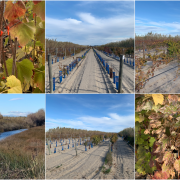
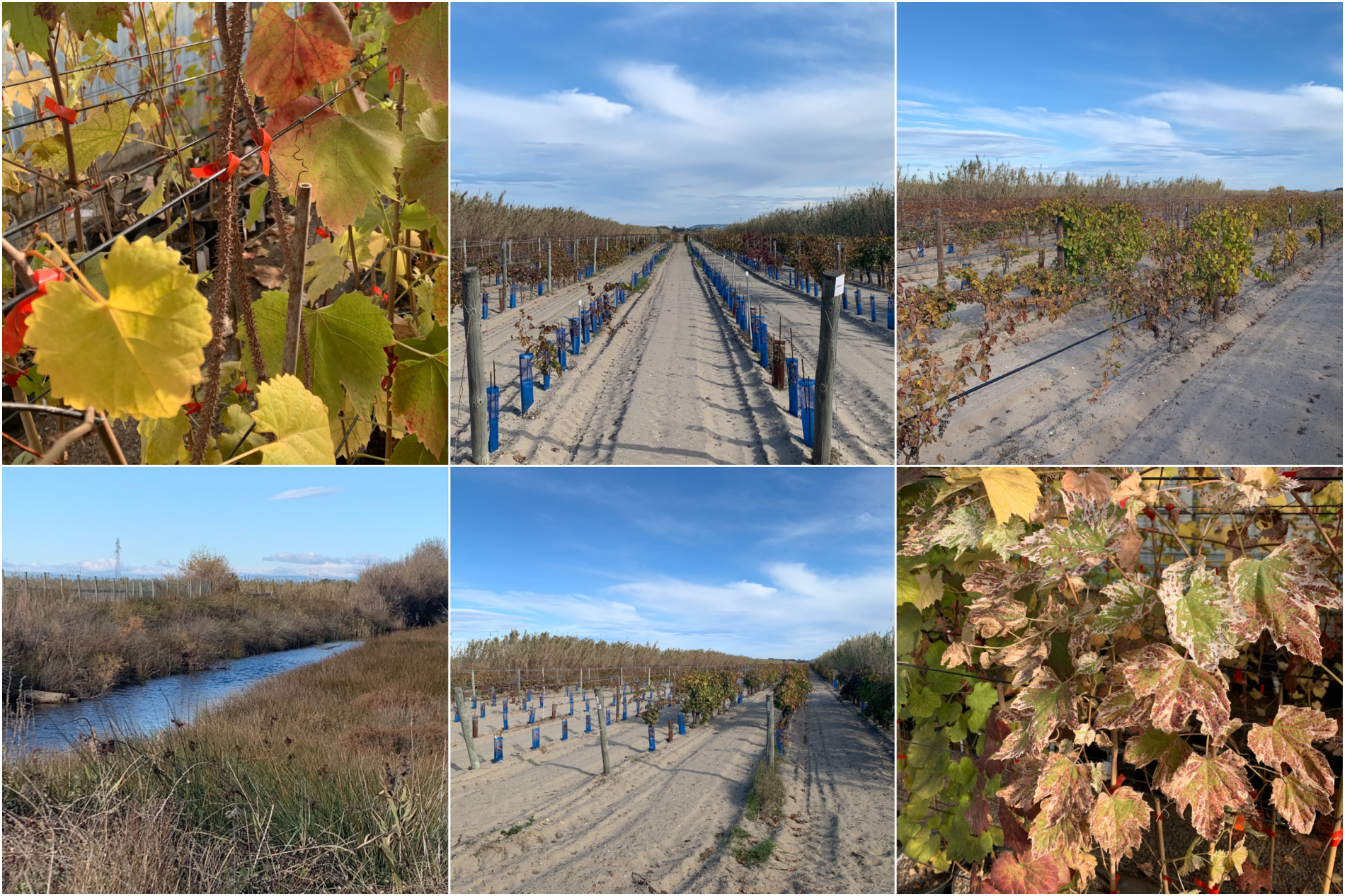
The Grapevine Biological Resources Centre (CRB-Vigne), an experimental unit of the French National Institute for Agricultural Research (INRA), was started 140 years ago in Montpellier and is now composed of 8,000 accessions from all vine-growing countries. It preserves a great diversity of vine varieties in addition to rootstocks, hybrids and species related to Vitis vinifera. It is in fact dedicated entirely to the preservation, characterisation and development of grapevine genetic resources.
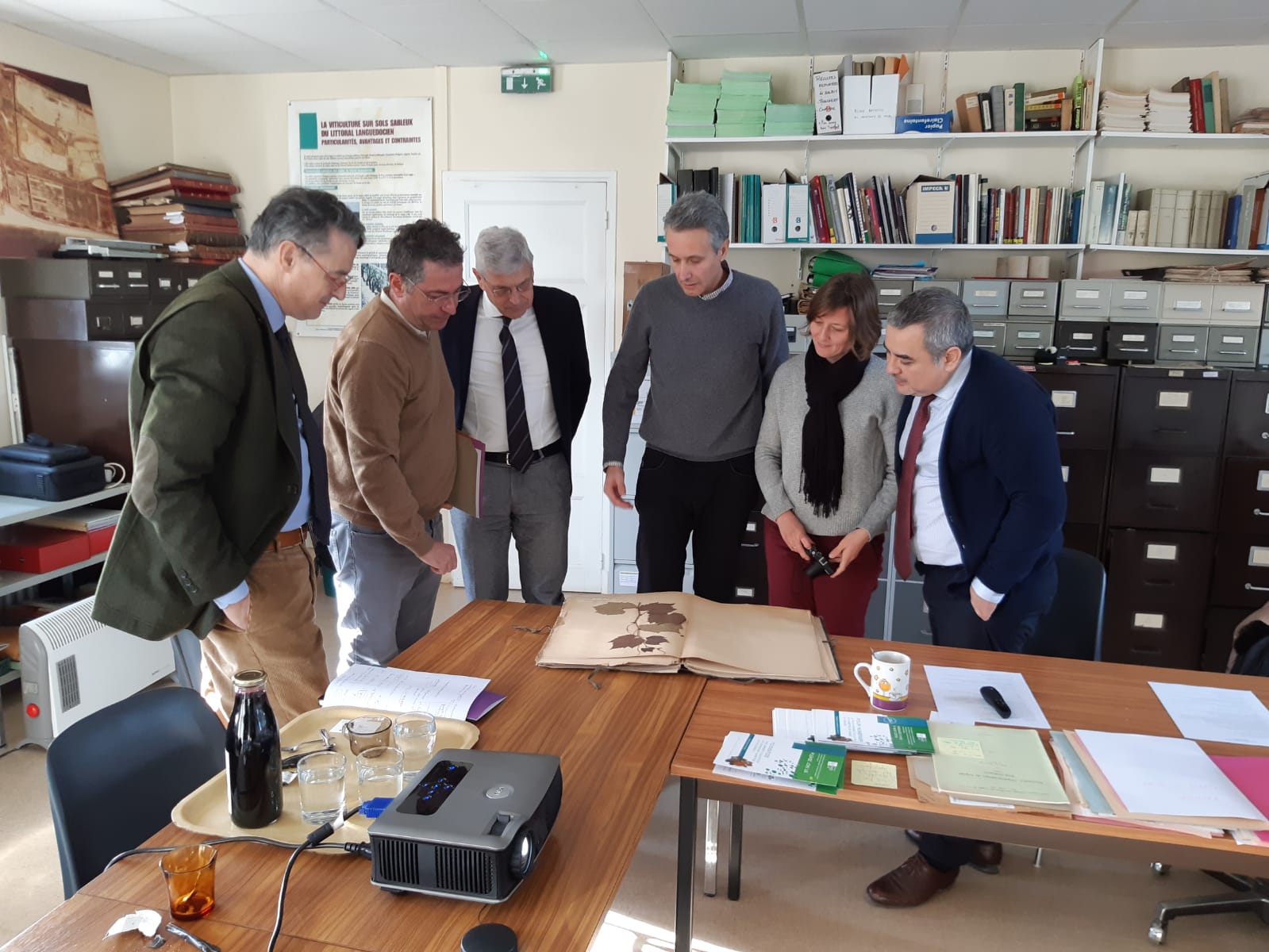
As part of the work being advanced by the OIV GENET – Genetic Resources and Vine Selection – Expert Group, which belongs to the “Viticulture” Commission (see the OIV Scientific and Technical Committee organisation chart), representatives of the Organisation visited the Vassal-Montpellier CRB-Vigne.
In particular, OIV Director General Pau Roca, GENET Group President Luigi Bavaresco, and “Viticulture” Unit Head Alejandro Fuentes Espinoza were able to meet Cécile Marchal, Director of CRB-Vigne, and experts Jean-Michel Boursiquot (Montpellier SupAgro, UMR AGAP) and Thierry Lacombe (INRA Montpellier, UMR AGAP).
Standing together on the preservation and protection of the global genetic heritage of grapevines
The objectives of CRB-Vigne are also a priority for the OIV, specifically with regard to certain actions undertaken by the “Viticulture” Commission, through its GENET Expert Group.
During the visit, the vital role that the OIV must play in the preservation and protection of grapevine genetic heritage at the international level was raised.
In this sense, several points were brought up:
- Vitis vinifera subsp. sylvestris or Lambrusco. This subspecies, regarded as the ancestor of Vitis vinifera, is classified as protected in France, since it is considered endangered. It is also at risk of disappearance in other countries. Lambrusco plays the role of a genetic reservoir, which today is vital for the maintenance of biological diversity in vineyards worldwide, particularly in the face of disease and/or their adaptation to future climate shocks. The OIV is thus contemplating carrying out an action to promote the maintenance and preservation of Lambrusco internationally.
- Also with the objective of preservation, the OIV should play an essential role in the maintenance/preservation of documentary resources for ampelographic collections at the global level. The OIV is also considering an action that will allow the format of documentary resources for ampelographic collections to be adapted to new practices related to the digital revolution, in order to facilitate access to all of this knowledge, and thus offer new opportunities to actors in the field.
- Last but not least, the final point raised was the action under way within the GENET Group relating to OIV descriptors for the Vitis species. Historically a scientific and technical leader in the description of Vitis varieties, the OIV is currently updating these descriptors.
The description of varieties and ampelography in particular remain a fundamental tool in the viticulture field, giving different actors in the vitivinicultural sector a better choice of productive varieties with which to face up to new environmental challenges and climate change.
The Director General hopes that these actions become a major priority for the OIV and the “Viticulture” Commission, in a sector that now needs more and more diversified tools and responses on different scales to continue its development.
On 15 November 2019, over 200 participants attended the 7th Wine Track® event, held in Reims (France).
Under the high patronage of the OIV, this symposium co-organised by the Society of Chemical Experts of France (SECF) and the Champagne-Ardennes section of the Union of Oenologists of France was a unique opportunity for scientists to discuss the tools and techniques that help ensure the traceability and guarantee the authenticity of vinicultural products, especially in relation to counterfeiting and fraud.
OIV Scientific Coordinator Jean-Claude Ruf took the opportunity to highlight the OIV’s long-standing commitment in these areas, particularly through the creation of international standards relating to:
- the definition of products,
- oenological practices, in particular as regards consumer safety and maintaining the authentic character and organoleptic qualities of wines,
- labelling rules,
- the implementation of traceability standards, and
- the implementation of analytical standards to monitor this traceability and origin.
Traceability and authentication systems require a high level of trust among operators, especially in blockchain systems, as well as a certain level of interoperability between systems.
As regards authenticity, while methods to measure light isotopes are still widely used, the analysis of non-traditional isotopes, of trace elements, can be used to show that each wine has its own natural isotopic signature. Similarly, other isotopes such as those of nitrogen can serve as a geographic marker.
Finally, non-aggressive methods of laser ablation can detect counterfeiting by analysing the container, which also has a specific chemical signature.
It would therefore seem that the different methods, such as the analysis of stable isotopes or of certain light isotopes, as well as the determination of trace elements or proton analysis, constitute complementary tools that open up new horizons and perspectives in the field of traceability and authentication.
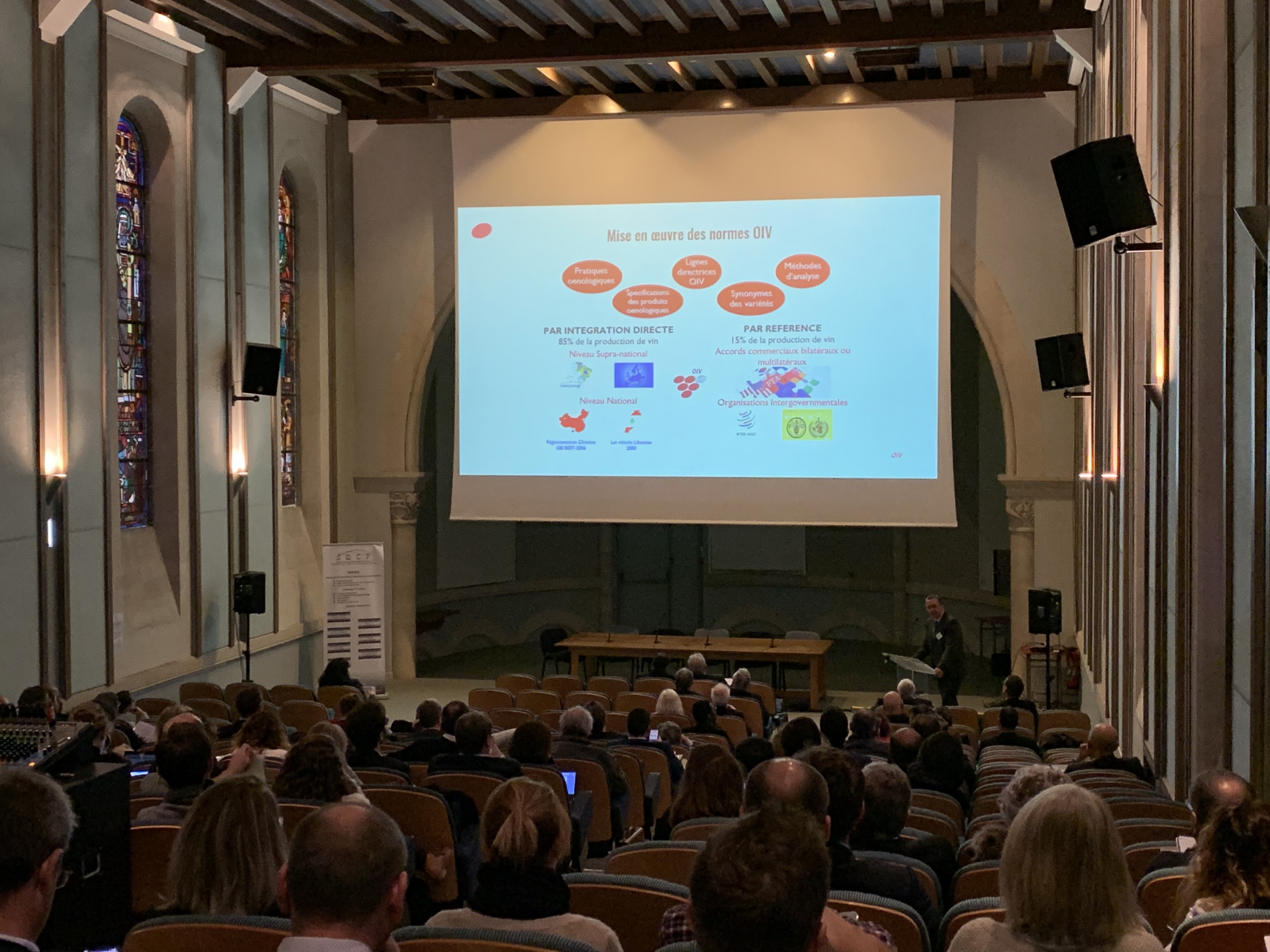
Jean-Claude Ruf OIV. Wine Track® 2019
© Photo : R. Lartigue - Toppan Europe