
In the current circumstances, accordingly with the Steering Committee, and under the precaution principles applicable in these situations, I regret very much to inform you that, the OIV Spring meetings scheduled from 24 March to 3 April 2020 in Paris, France are cancelled and will be postponed.
Due to the availability of rooms, the tentative agenda will be to have Sub-Commission of Methods of analysis from 3 to 5 of June, and Commission Enology meetings from 6 to 11 of June, in Paris
The other meetings will be held from 15th to 24th of July 2020 also in Paris.
A more detailed agenda will be sent very soon.

A General Engineer in Rural Engineering, Water and Forestry, Georges Dutruc-Rosset spent an exceptional career in various agricultural agencies of the French government.
He was successively Assistant to the Director of the Agriculture and Forestry Authority in the departments of Pas de Calais, Seine et Oise and Gard. Then, from 1967 to 1972, he was Project Coordinator in charge of planning for the Cévennes National Park, before going on to lead a number of different agencies:
Director General of the Society for the Development of Auvergne and Limousin in Clermont-Ferrand (SOMIVAL) (1972-1975),
Deputy Director of the National Interprofessional Office for Livestock and Meat (ONIBEV) (1976-1980),
Deputy Director of Planning at the Ministry of Agriculture and Forestry (1981-1986),
Delegation Head for the ‘Integrated Mediterranean Programmes’ (IMPs) (1986-1987),
Director of the National Interprofessional Office for Fruit, Vegetables and Horticulture (ONIFLHOR) (1987-1993),
Director of the Interprofessional Office for Meat, Livestock and Poultry (OFIVAL) (1993-1995).
As Chief of Staff to the Minister for Agriculture, Fisheries and Food, Philippe Vasseur (1995-1996), he was put forward by France as the candidate to succeed Robert Tinlot as OIV Director General.
He was elected in South Africa in 1996, and held office until 2003, when Federico Castellucci was voted into office.
His mandate was primarily devoted to a period of audit and reform of the OIV. It was during this time that the Agreement of 3 April 2001 establishing the International Organisation of Vine and Wine was negotiated and signed, as well as the OIV Rules of Procedure.
A former Navy Captain, Georges Dutruc-Rosset was recognised by the French Republic for his achievements: he was an Officer of the Legion of Honour and of the National Order of Merit, a Commander of the Order of Agricultural Merit, and a member of the French Academy of Agriculture. His avowed passion for hunting led him to become Commissioner for the estates of Rambouillet and Marly-le-Roi on his departure from the OIV.
The OIV pays tribute to the memory of our former Director, who devoted his skills to restructuring the Organisation, and we offer our sincere condolences to his wife Yvonne and his children.


Due to the pandemic impacting us all, our organisation recently held these meetings online for the first time. Inevitably, the current health crisis has taken a prominent place.
The expert groups ECOMAR (Economic Analysis, Markets and Consumption) and STATCO (Situation and Statistics) were invited to answer a questionnaire on the impacts of this crisis. The main wine-growing countries (about 15) answered and the results were presented at the meetings held throughout June.
In this article we summarise the main outcomes of the questionnaire, as identified and discussed by OIV experts. The summary of conclusions is provided by Françoise Brugière, the Vice President of the ECOMAR group.
A crisis preceded by a challenging context
Quantitative analysis of the international wine trade in the first half of 2020 is delicate. Indeed, the health crisis comes after a disturbed end of 2019 in China and Hong Kong and, more specifically for France, by the «Trump tax». With the arrival of the pandemic, according to the OIV experts, logistical problems were caused by the implementation of sanitary protocols at ports and airports entrances, the suspension of passenger flights, the priority given to care for those carrying medical equipment, and then to providing basic necessities. Subsequently, with or without the inclusion of wines, these were recovered over the weeks. Nevertheless, world wine trade recorded a decline in value of 6.3% in February and 10.7% in March (compared to February and March 2019). More specifically, Chinese imports decreased by a quarter in both volume and value for the first 4 months of 2020 compared to the last 4 months of 2019. Brazil, Switzerland, France (over 4 months), the UK, Germany and Russia (over 3 months known) reduced their imports while the USA, Canada, Ireland (in value) as well as Spain, Czech Republic (in volume) increased theirs. The price trend is clearly downwards for all countries.
Overall impacts and measures taken
In all countries, the halt in tourism and the closure of bars and restaurants led to a sharp decline in points of sale. The shift to home sales was very partial and mainly concerned less expensive products, particularly with the development of bag-in-box sales.
All BtoB marketing actions and especially the major international fairs were cancelled, as well as wine festivals. The organisation of competitions and tastings was also disrupted. Currently, digital versions of these events are being tried, but the feedback is somewhat misty.
In all countries, measures for all sectors, more or less generous, of state aid for employment through measures to help businesses with their cash flow have been introduced. Companies of all sizes, from specialist retailers to wine growers and cooperative wine cellars have developed e-commerce solutions with delivery or “click & collect” options, more to keep in touch with customers than to generate significant income.
Southern Hemisphere harvest affected
Caught by surprise, countries in the Southern Hemisphere had to act urgently to complete the harvest. They were confronted with difficulties in terms of labour displacement, implementation of sanitary regulations for vineyard and cellar workers (supply of personal protective equipment, hydro-alcoholic gel and masks, rotation of teams without contact with each other, etc.).
In particular, the South African wine industry had to face the total prohibition of alcohol sales on the domestic market, and for several weeks, wine export was also halted. After negotiations, the continuation of the vintage, wine transport and export were again allowed.
Concern about current and future challenges
Economically speaking, in the short term, the stocks accumulated during the weeks of lockdown, especially on the most highly valued products, will feed the fall in prices. The upcoming harvest in the Northern Hemisphere could exacerbate this situation. In the medium term, in all countries, many expected bankruptcies of tourism and retail businesses due to the demand shock will have immediate consequences for their suppliers. The forthcoming economic and possibly financial crisis is likely to have an impact on the leisure sector by refocusing the budget of most households on basic necessities.
On a more psychological level, the health crisis, the lockdown of half of the world’s population for several weeks and the persistence of the epidemic risk could permanently undermine the value of sharing and conviviality that drives the development of wine consumption in the world.
If this crisis falls into the collective unconscious that one must be alone to be safe, that a group of more than 10 people is an epidemic cluster in power, the resumption of qualitative wine consumption will be compromised.
What’s next?
In line with the OIV Strategic Plan and the issues for which they are responsible, the two groups of experts undertake to work on different axes of analysis and are organising remote work in the coming months on the following issues:
- the evolution of the world wine stock,
- changes in consumption practices (distribution channels, consumer opportunities, quality signs, prices, etc...)
- the evolution of wine tourism and, more broadly, the monitoring of the restaurant and tourism sector,
- exchanges on the crisis management tools implemented
- the digitalisation of the wine sector (marketing, trade, e-certificates…)
* The OIV Spring meetings are an opportunity for our expert's groups to get together. These groups are responsible for studying scientific and technical issues within the scope of the OIV Strategic Plan and are each attached / related to the respective Commission by topic. See the OIV Scientific and Technical Committee Organisation chart.


On Tuesday 22 September, the Director General of the International Organisation of Vine and Wine (OIV), Pau Roca, and the Secretary General of the World Tourism Organisation (UNWTO), Zurab Pololikashvili, welcomed speakers from the wine tourism sector and participants from all over the world for a webinar jointly organised by the two organisations.
Held in cooperation with the International Wine Tourism Think Tank and moderated by Mariëtte de Toit-Helmbold, based in Cape Town, the focus of the webinar was put on “Innovating in wine tourism in the context of COVID-19".
Speakers from Argentina, Chile, France, Italy and Spain shared their recent experience on how they have dealt with the impact of COVID 19 on their wine tourism activity. Some common trends have emerged in how to innovate in order to rethink and recreate wine tourism in the current context. The importance of local markets, new partnerships, open air experiences and digital transformation were highlighted.
Get to know the customers to offer a personalised experience, finding the right balance between technology and human contact are fundamental for the participating panellists, as digital modifications are here to stay. Along with these changes, improving local tourism turned to be the key for recovery, having sustainability as a pillar.
Watch the webinar here:

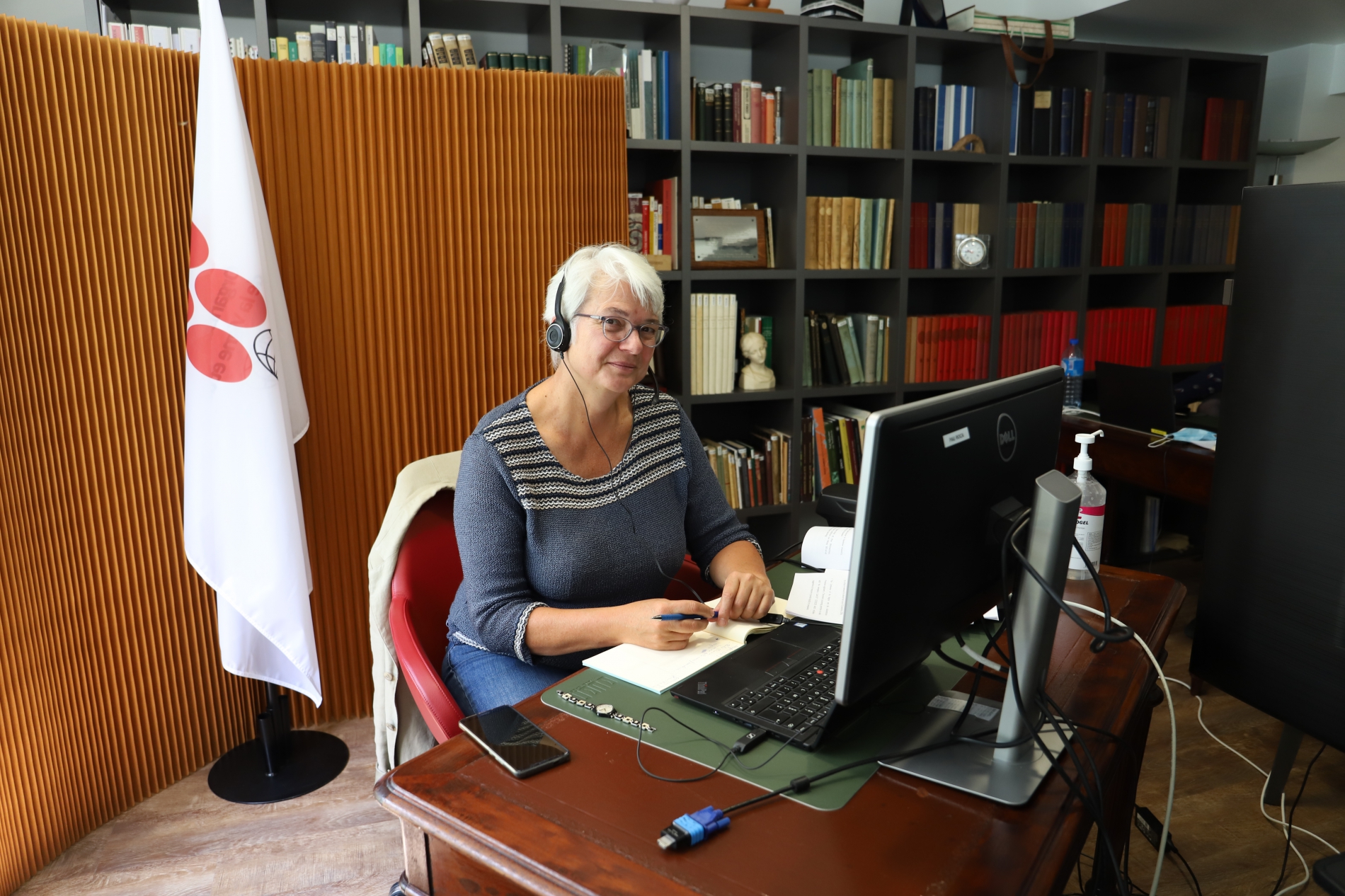
Speaking from the OIV’s headquarters in Paris, by web conference, Director General Pau Roca, presented on 27 October, the first estimates of 2020 world wine production.
- Lower than average production volume in the EU, where measures to reduce the harvest volume had a significant impact in Italy, France and Spain notwithstanding the overall favourable climatic conditions.
- First harvest forecasts in the US indicate volumes in line with 2019, but uncertainty caused by wildfires might lead to further revisions.
- Drop of South America’s wine production, especially in Argentina and Chile due to unfavourable weather conditions.
- South Africa finally back to “normality” after several years of drought.
- Australia records a low harvest due to bushfires while New Zealand shows a record harvest volume in 2020.
Replay
2020 Wine production first estimates
