Organised by the Lebanese Ministry of Agriculture on the theme of ‘new strategies and technologies for the Lebanese wine industry’, the event, held at the Holy Spirit University of Kaslik (USEK), brought together leading companies from the sector united under the Union Vinicole du Liban (Lebanon’s association of wine producers), as well as a number of industry experts.
Speakers from different countries (e.g. France and Italy) offered insights into the latest technical, scientific and economic developments.
The Director General of the OIV, along with his Assistant, took part in the day’s activities. On this occasion, Jean-Marie Aurand emphasised the ‘close and fruitful’ relationship enjoyed with Lebanon since the country became a member of the OIV in 1995.

Vitivinicultural activity in Lebanon has experienced remarkable growth over the last 20 years
As early as 1997, the Union Vinicole du Liban was created on the advice of the OIV. In 2000, Lebanon passed a law relating to wine, on the basis of which the National Institute of Vine and Wine was created in 2013. Over the last six years, and under the dynamic leadership of Director General Louis Lahoud, the relationship between the OIV and Lebanon has grown even stronger.
Mr Aurand also noted the success of the Lebanese Wine Day events, which were held in Paris in 2010 and 2013, in Berlin in 2014, in the United States in 2016 and 2017, and this year in Switzerland. Organised by the Lebanese Ministry of Agriculture, this year’s event attracted a large audience of specialists who, over the course of one day, had the opportunity to discover the diversity and quality of Lebanese wine production. He praised the involvement of the Director General of the Ministry of Agriculture, Mr Louis Lahoud, and the support of the Minister for Foreign Affairs, Mr Gebran Bassil.
During his visit, the Director General of the OIV was received by the President of the Lebanese Republic, General Michel Aoun, and by Prime Minister Saad Hariri, who both assured him of their country’s support in the activities of the OIV.

Jean-Marie Aurand with:
1. The President of the Lebanese Republic, General Michel Aoun
2. The Prime Minister, Saad Harir
Demonstrating the importance of the vitivinicultural sector in the country, high-level meetings were also held with the Minister of Economy, Mr Raed Khoury (1); the Minister for Justice, Mr Salim Jreissati (2); the Minister for Information, Mr Melhem Riachi (3); and the Minister for Tourism, Mr Avedis Guidanian (4).


Vitivinicultural activity in Lebanon has experienced remarkable growth over the last 20 years; today it has almost 50 wineries whereas 20 years ago it had eight.
The country produces about 80,000 hL of wine a year and exports half of its production. It also promotes native vine varieties such as Obeidy or Merweh in an effort to rediscover the roots of this age-old winemaking tradition.

The 36th International IWLA Conference focused on the challenges of climate change
Organised around this theme, the 36th International Wine Law Association (IWLA) Conference has brought together in Napa 150 legal professionals from around the world in order to gain understanding of the legal consequences of these issues.
On 1-3 October 2018, the IWLA held its international conference in Napa (USA), covering the necessary development of wine law particularly in the face of the challenges of climate change. During the opening of the two sessions devoted to these issues, the OIV Director General took the opportunity to reiterate how this topic has become a priority among the strategic axes developed by the OIV. These axes are established in order to consider the environmental, societal and economic objectives of the industry, and form part of a holistic approach seeking to ensure the sustainability of the vitivinicultural sector.
The communications and discussions surrounding this theme, which was chosen by the Californian hosts of the Conference, were very valuable. In particular, speeches from academics from Stanford and Berkeley and from professionals provided better understanding of initiatives implemented by companies in the sector with their societal and environmental responsibilities in mind, taking as examples the Champagne sector in France or E. & J. Gallo in California.

Wine civilisation and its responsible consumption by Ernest Gallo
During this visit, Jean-Marie Aurand travelled to Modesto (USA) where he visited Gallo’s headquarters and imposing installations, and met with Ernest Gallo. It was an opportunity to commemorate the 25th anniversary of the declaration made by his grandfather Ernest Gallo during the OIV Assembly in San Francisco in 1993, which had the aim of promoting wine civilisation and its responsible consumption and enabled the founding of the “Wine and Health” Commission within the OIV thanks to USA support.

The implementation of analytical standards developed by the OIV
The OIV Director General was also able to see the importance and the implementation of analytical standards developed by the OIV during a visit to ETS Laboratories. ETS founder Gordon Burns presented the microbiological analysis unit, which allows for early detection of the risks of contamination by undesirable bacteria, yeasts or spores.
Meeting with students in the sector
This visit was also an opportunity to present, at CAL POLY (the California Polytechnic State University), the major economic trends and issues of the sector. During these exchanges with the students and the head of the Wine and Viticulture department, Dr Benoît Lecat, Jean-Marie Aurand spoke at length on the social and societal environment that influences the vitivinicultural sector and the need to ensure adequate training for those that will lead the sector in the years to come.


With 282 million hectolitres (mhl), 2018 vitivinicultural production is one of the highest since 2000.
- In Europe: Italy (48.5 mhl), France (46.4 mhl) and Spain (40.9 mhl) recorded very high production levels. Germany (9.8 mhl), Romania (5.2 mhl), Hungary (3.4 mhl) and Austria (3.0 mhl) have also forecasted harvests above their 5-year averages. Portugal (5.3 mhl) and Greece (2.2 mhl) were the only countries to see a decrease in production compared with 2017.
- Production levels in the United States (23.9 mhl) have remained stable for 3 years.
- In South Africa, drought significantly impacted 2018 production (9.5 mhl).
- South American production levels were very high. In Argentina (14.5 mhl) vinified production increased by 23% compared with the previous year, and in Chile (12.9 mhl) it grew by 36%. Brazil (3.0 mhl) reached a high level, even if its production fell compared with the very strong 2017 production.
- Australian wine production (12.5 mhl) declined compared with that of the previous year and New Zealand production (3.0 mhl) remained at a very high level.
Under the OIV's high patronage, this conference organised by the Society of Chemistry Experts of France (SECF) and the Association of Oenology Laboratories of Portugal (ALABE) focused on progress in analysis techniques, standards and methods allowing for and guaranteeing the identification and authentication of wines and spirits.
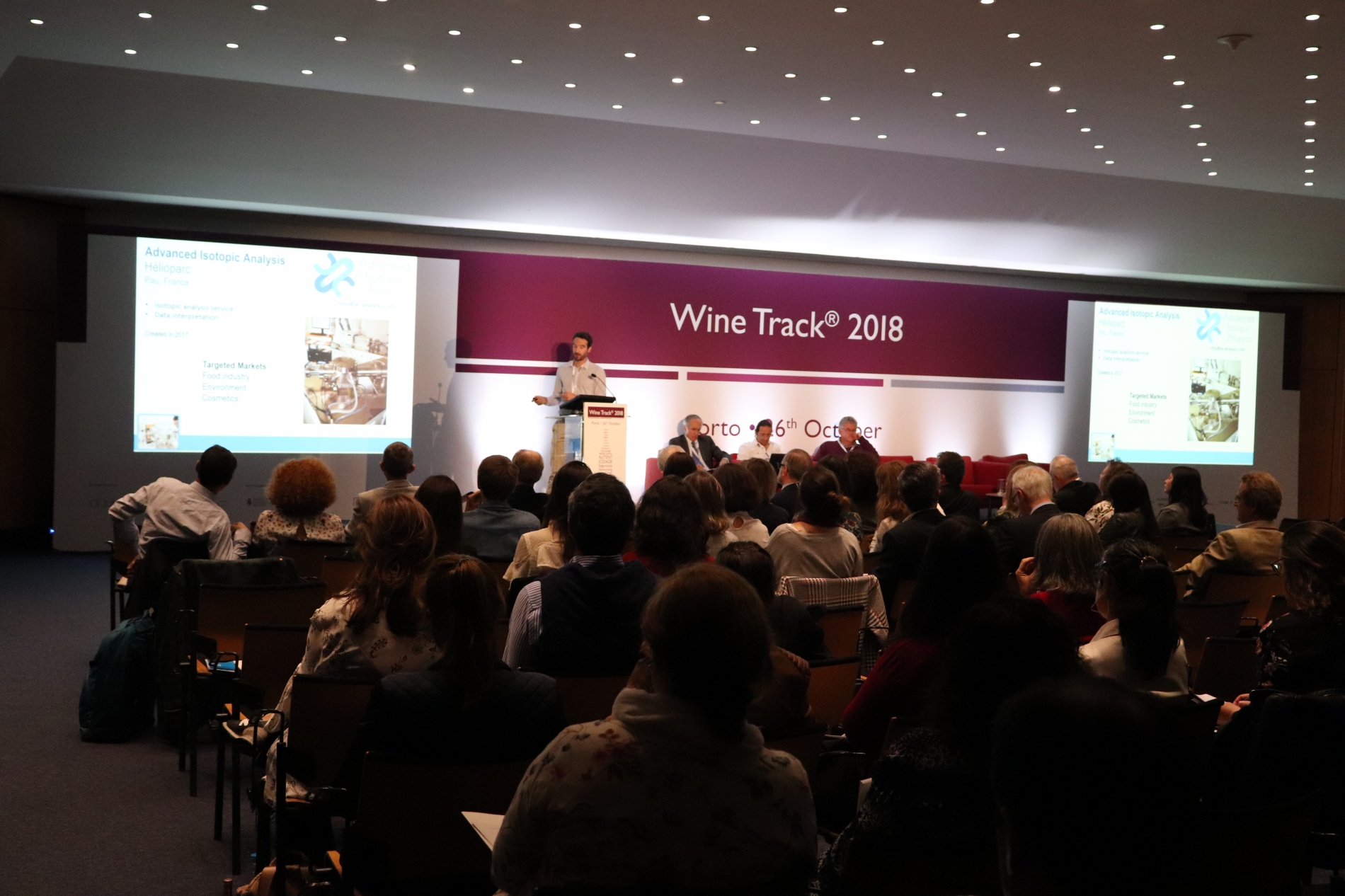
The techniques and tools working together to ensure the traceability of vitiviniculture products aim to better preserve the authenticity and quality of wines, especially when it comes to counterfeits and fraud.
Traceability is meant in a very broad sense and concerns both viticulture as well as the winemaking process, the product itself, its packaging and its distribution. This year, a particular emphasis was placed on the isotopic analysis of wine, the traceability of the cork and of the glass of the bottles.
Wine Track® 2018 was a unique moment of exchange between scientists and materials and equipment providers regarding the current situation and methods available to guarantee the authenticity and traceability of products in the sector and to imagine new solutions.
The importance of guaranteeing the authenticity and traceability of vitivinicultural products
Jean-Claude Ruf, Scientific Coordinator of the OIV, emphasized the importance of guaranteeing the authenticity and traceability of vitivinicultural products in an increasingly globalised market.
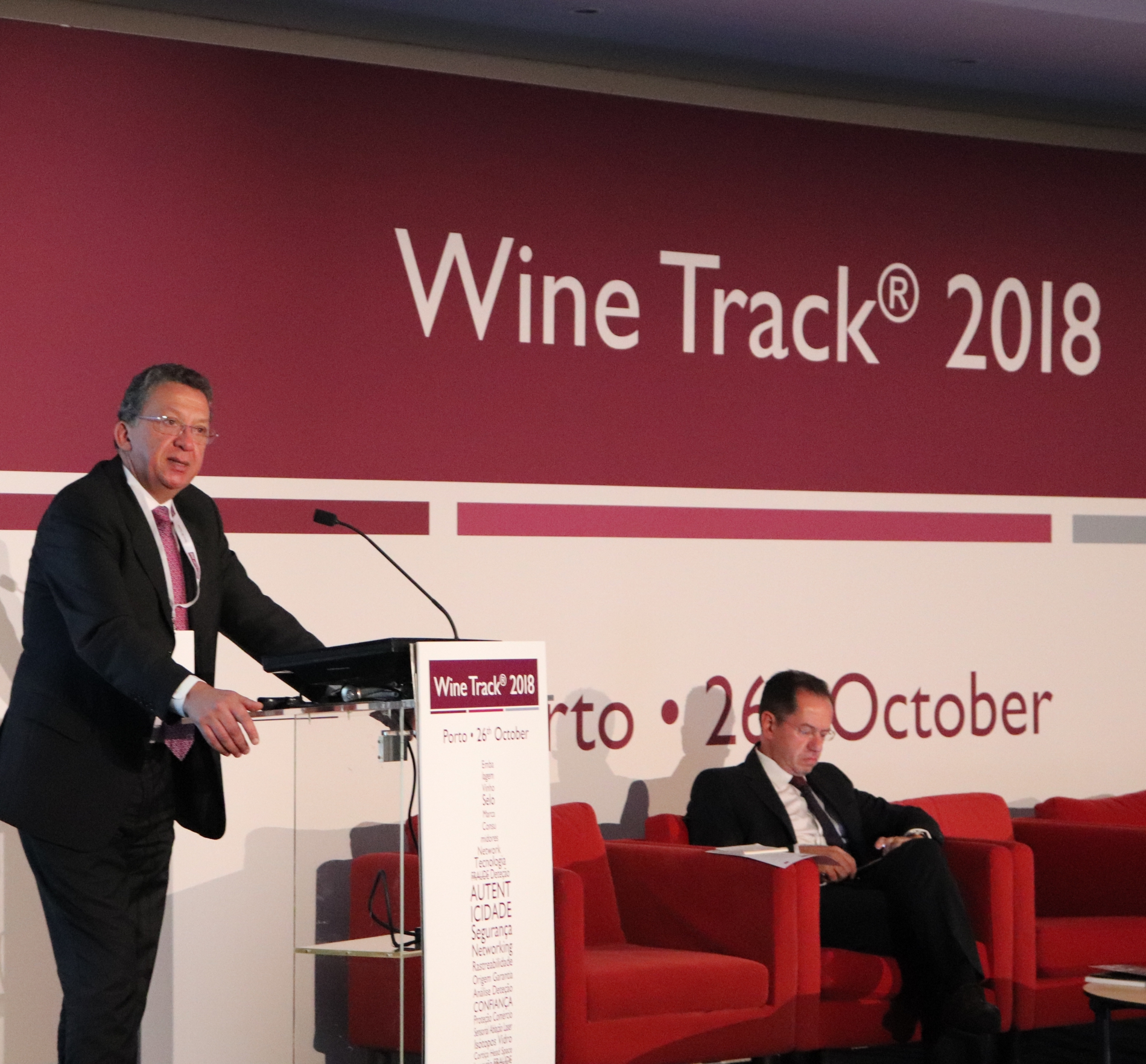
Furthermore, he detailed the steps the OIV has already taken in this area, notably through the establishment of international standards related to:
- the definition of products,
- oenological practices and especially the concern for the consumer's safety and for maintaining the authentic character of the wines and their organoleptic qualities,
- labelling rules,
- the establishment of traceability standards,
- the establishment of analytical standards in order to monitor this traceability and these origins.
Following the conference, it was decided that the next edition of Wine Track® will take place in the Champagne region (France) in 2019.

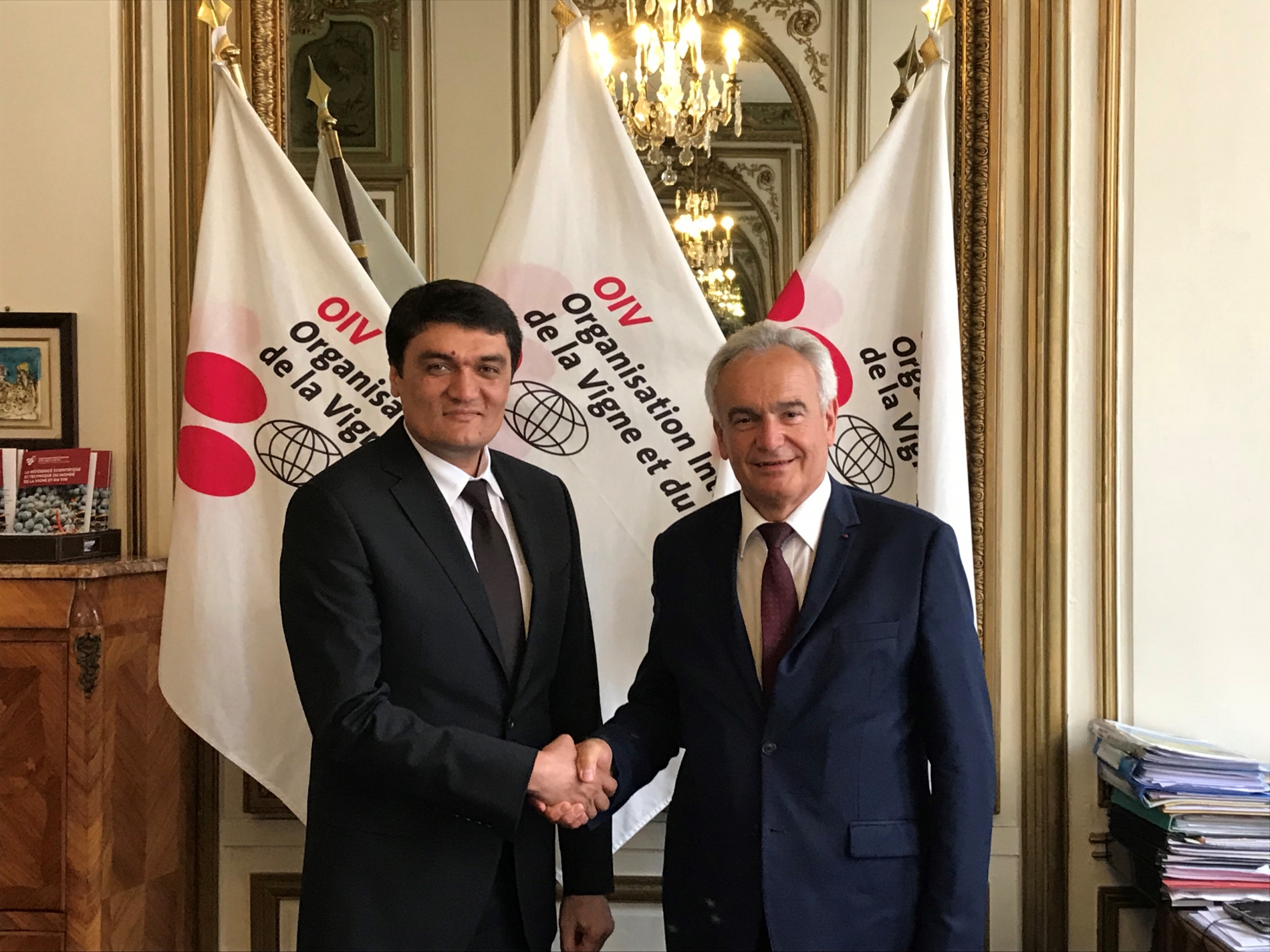
As explained by the Uzbek Minister for Foreign Affairs, Abdulaziz Kamilov, through this membership Uzbekistan hopes to support the government's efforts to develop a vitivinicultural sector which is rapidly changing and which has been the subject of a development plan enacted by the President of the Republic.
During a conversation with the Uzbekistan Ambassador to France, the Director General of the OIV expressed his pleasure at the new membership of this nation which is the largest producer of grapes in Central Asia and is one of the leading exporters of fresh grapes.
Jean-Marie Aurand also reminded those assembled that the official induction of this new Member will take place at the OIV General Assembly in Punta del Este next 23rd November.
Fresh Grape Production in Uzbekistan
The production of fresh grapes takes place primarily in the South of the country, Samarkand, the Surkahandarya regions and Fergana Valley thanks to a long warm period which lasts from spring to autumn and allows for the growth of around forty different varieties. The main varieties used are Soyaki and Bayan-Shirin (sparkling wines and brandies), Saperavi and Rkatsiteli (still wines) and May Black, Rosy Muscat and Hindogni (dessert wines). For fresh consumption, the most popular grapes are the Khusayni, Rizamat, Kishmish and Damskiy Palchik varieties.
As part of the government’s development plan, vineyards have been expanded to 133,000 hectares (2013) for a grape production of nearly 1,322,000 tonnes (2013) and continue to grow with new planting.
73% of the production is consumed locally in the form of fresh grapes, 4% is exported. The remaining 23% is used for the production of grape juice, wines and brandies. The largest business in the country is the Uzvinsanoat Company which brings together 120 processors of which 83 are wineries which use around 215,000 tonnes of grapes.
Uzbekistan produces nearly 60,000 tonnes of raisins annually, half of which is exported.